Tous les mardis se tient un souk rural où convergent les montagnards des environs. Immense, authentique, vivant, coloré, bruyant, il offre une véritable immersion dans le Maroc rural. Aït Ourir, en pays berbère, vaut un petit détour sur sa place centrale, avec son petit marché couvert, sa station d’antiques carrioles qui font office de taxis dans la ville.
A strategic location
Aït Ourir is located 35 km from Marrakech, on the road to Warzazat, a straight four-lane road. The town was built in a strategic location at the foot of the High Atlas Mountains, at an altitude of 670 m, at the mouth of the wadi Zat river where it cuts through the mountains via the Imi-n'Zat (the mouth of the Zat), a long 8 km corridor lined with orchards.
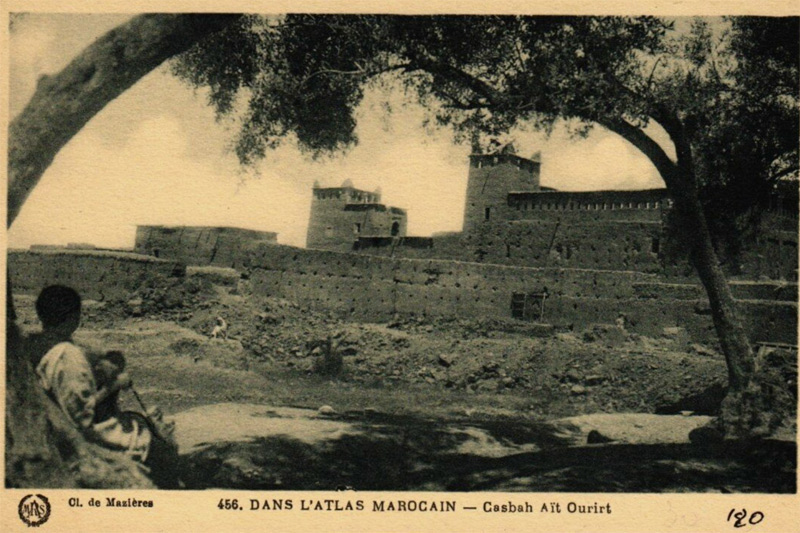
Because it locks this natural access to the mountains above, the site was chosen to build a kasbah (citadel), of which only ruins remain, and then a military post during the protectorate. For the tribes of the surrounding mountains, it is the first stop on the way down to the wide plain of Haouz.
Even today, the inhabitants of these nearby foothills of the High Atlas come here to shop at the weekly Tuesday market.
The Tuesday souk, a rural open-air hypermarket
The Tuesday souk is one of the largest in the Marrakech region, and probably the largest. The Berbers from the mountains may travel one to two hours by informal local transport to find what they cannot find in the souks in the immediate vicinity of their villages, such as Arbâa of Tighdouine (Wednesday), Khmis of Tidili (Thursday), Sebt of Iguerferouane (Saturday) and the hadd of Zerkten (Sunday).
They also come to sell their products, such as doom (dwarf palm) leaves, raw or in ropes, basketry and weaving products made at home, pottery, and of course agricultural and livestock products.
Vegetable and fruit sellers, butchers, bread sellers, grain sellers, straw sellers, wood sellers, tool sellers, basketry sellers, mattress sellers, and others: the list of what can be found in this huge traditional market is long.
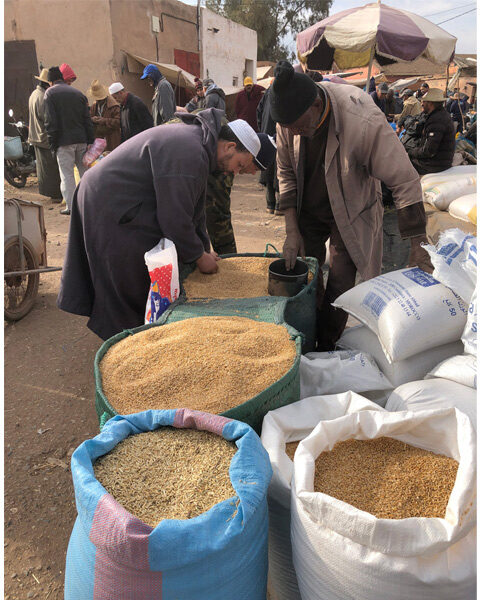
Les fellahs viennent écouler ou acheter du grain sur les marchés ruraux. C’est une de leurs fonctions essentielles.
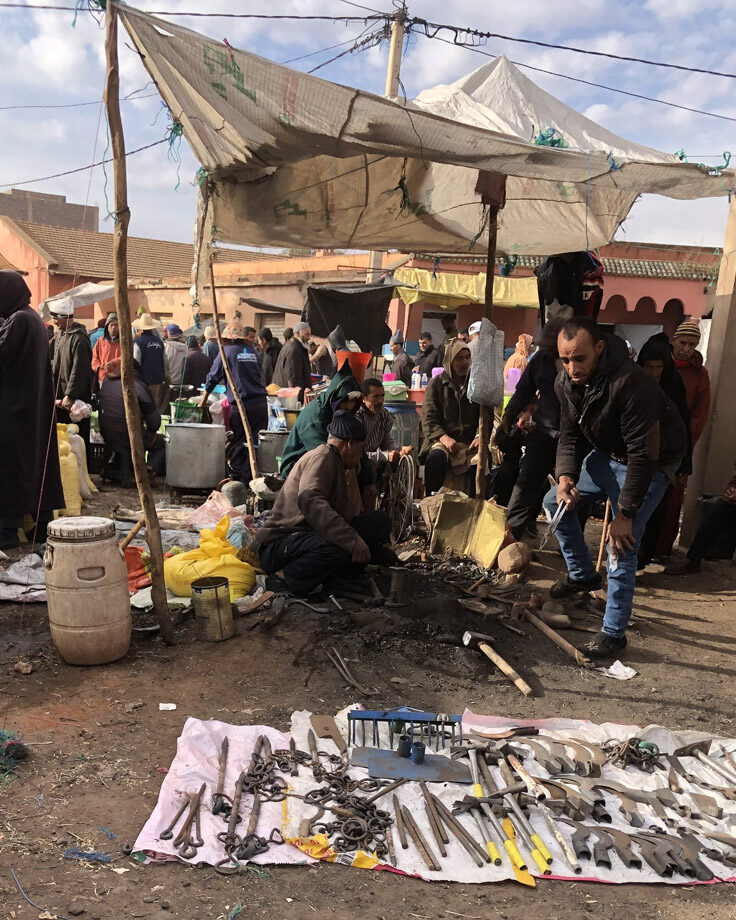
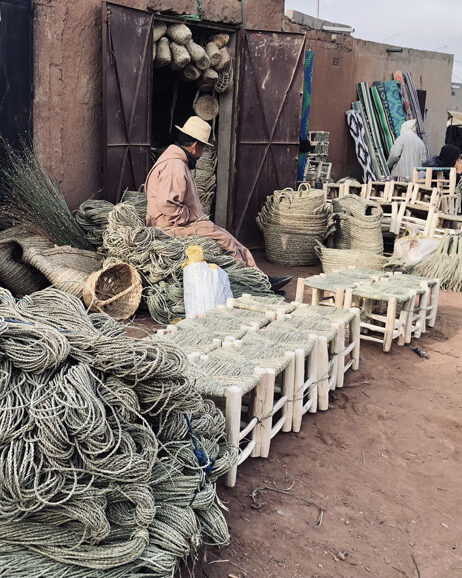
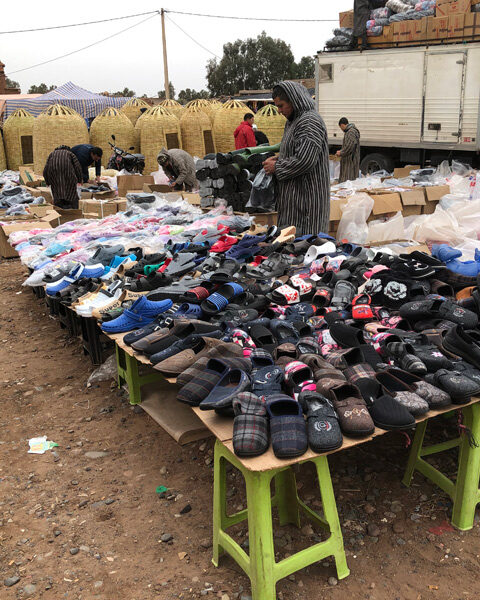
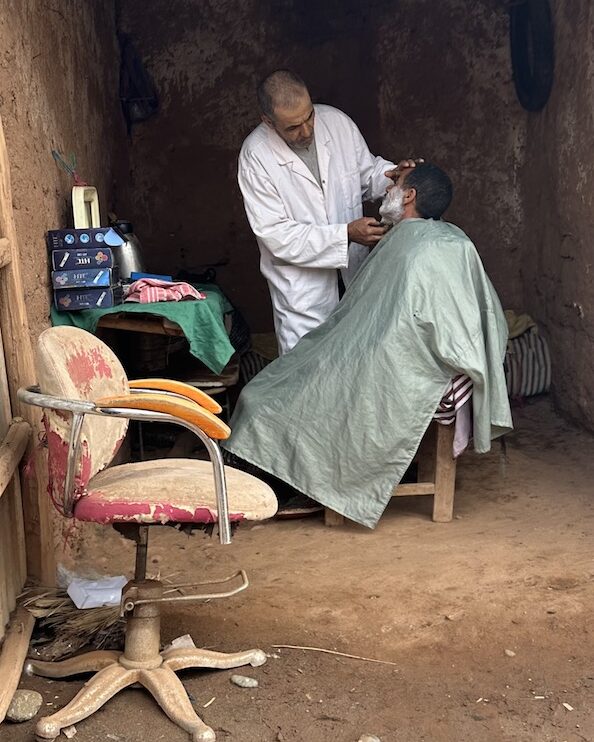
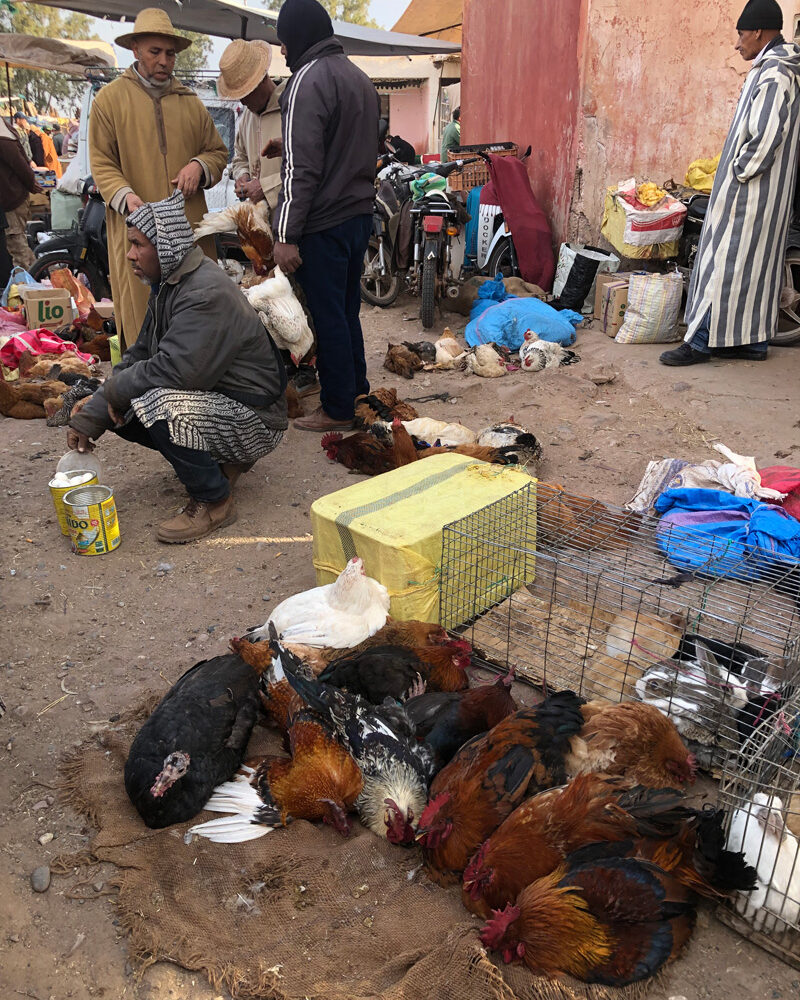
Unlike most weekly souks, this huge market still has small earthen stalls that house trades that are increasingly rare in these markets: tailors, cobblers, saddlers, tooth pullers, alongside the inevitable ironworkers and barbers. They come here to find a large clientele who take advantage of their visit to the market to sharpen a pickaxe and change its handle, revive a large hoe, alter clothes or remake a donkey saddle.
The livestock market opens much earlier, as is traditional in all these weekly souks. From Sunday onwards, farmers converge on the souk and until Tuesday morning, they haggle over their animals, cows, sheep, goats and horses. This is definitely the place to come if you want to buy a mule or a pack donkey, as they are extremely useful in these mountains where ploughing is still done with a plough and where mules remain an essential means of transport.
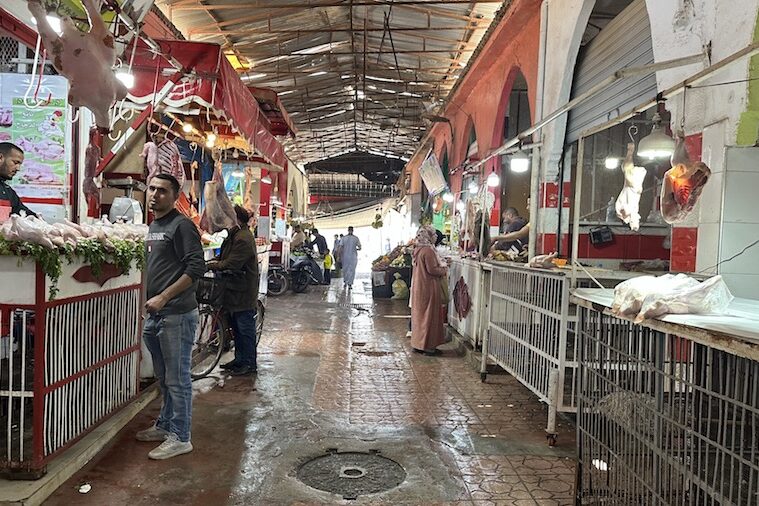
Animals are slaughtered on site to be cut up and sold by open-air butchers, many of whom are occasional and only work on market days, in stalls measuring one or two square metres.
To see : A huge, authentic and lively market with a wide variety of trades and stalls.Access : Ideally located on the N9 national road leading to Warzazat.
Aït Ourir, a sleepy town
Outside of market day, Aït Ourir is a sleepy little town of almost 40,000 inhabitants. It is predominantly Berber (70%), and the use of Tachelhit, the Berber dialect of the Atlas Mountains, is alive and well, even though everyone also speaks Moroccan Arabic.
The town has developed rapidly, welcoming rural migrants from the mountains, but without finding the means to develop its economy. The employment rate remains low (44%) and purchasing power is low.
The heart of the town is its permanent market, picturesque with its shops, but also its craftsmen, tailors, repairers, etc. It is next to the bus station and its inevitable eateries for departing travellers. Aït Ourir has few or no small (blue) taxis: this service is still provided by antique horse-drawn carriages, which drop off their customers at a pace from another era. The fare costs only five dirhams.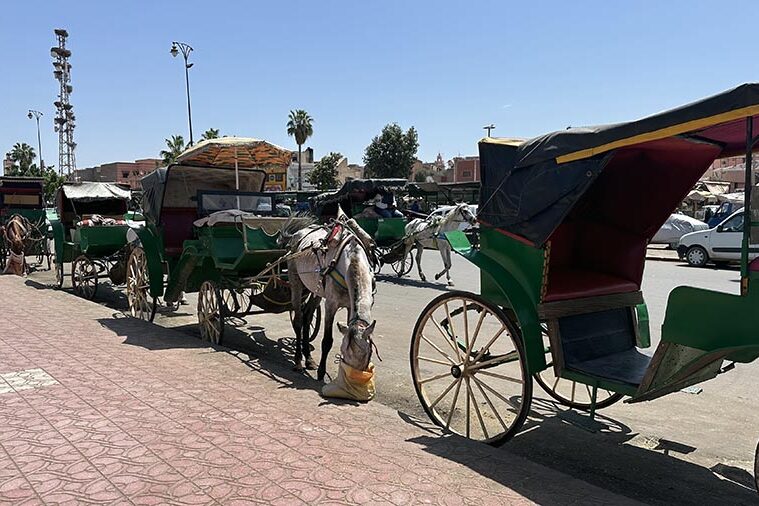
Singularité de la ville d'Aït Ourir, ce sont des charettes qui font office de taxi.
Things to see : A huge, typical central square. Horse-drawn carriages used as taxis. A few old buildings.
Access : Ideally located on the N9 national road leading to Warzazat.


