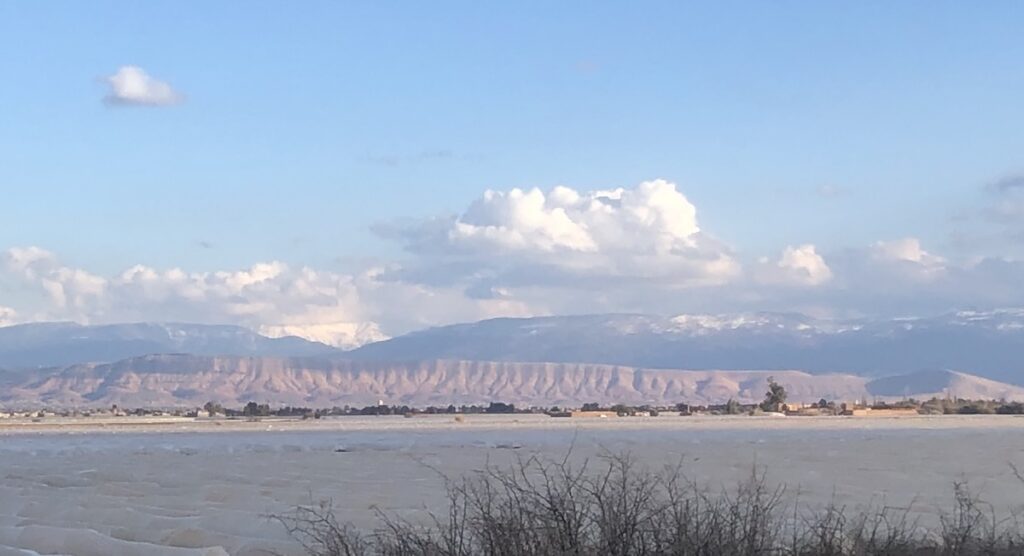
Between the two tiers of rocky bars on the horizon lie foothills where life is very active.
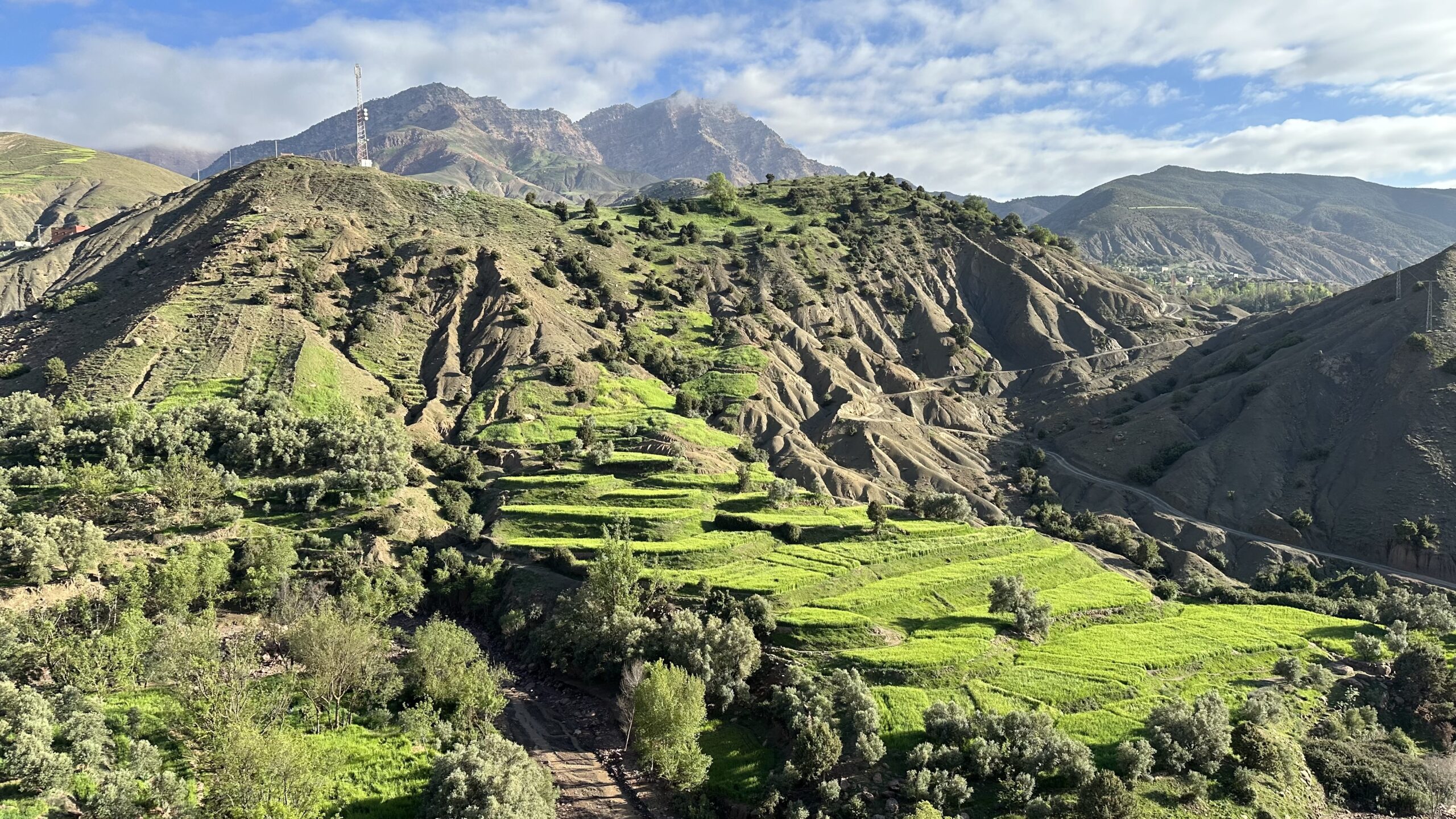
The Aït Bou Saïd wadi, also known as Wadi Lahjar or Assif Ouzrou in Berber (literally ‘river of stones’ in English), descends directly from two points on the high cliffs of the majestic Yagour, before joining the much lower, dry the Ourika wadi, is a lifeline for countless villages that have sprung up along its waters to irrigate beautiful terraces and live off their crops.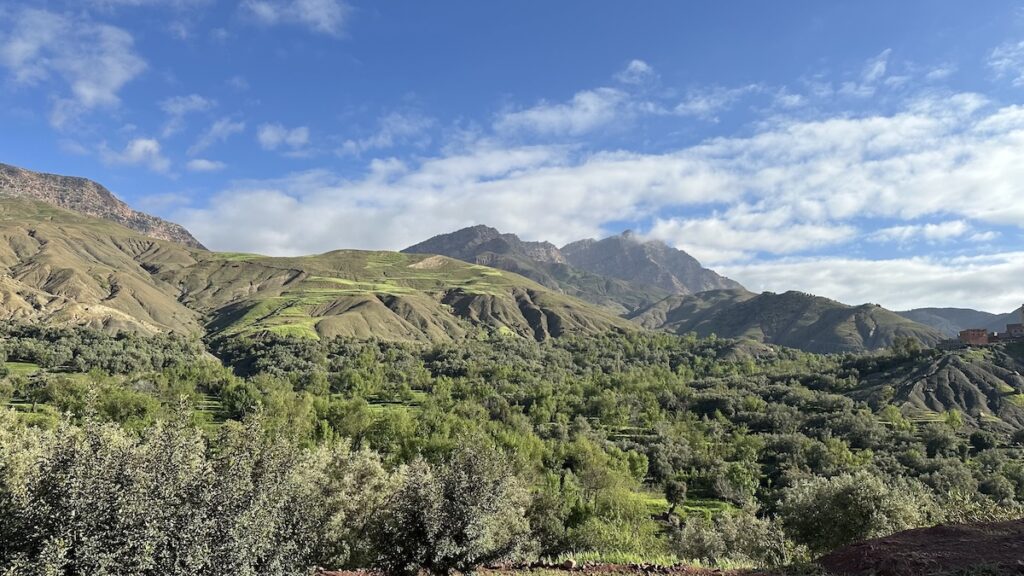
In this region, the mountains and the mighty Yagour are omnipresent.
Given the venerable olive and carob trees, which the inhabitants, proud to have preserved them, claim are over five centuries old and the oldest in the region, it is easy to imagine that their stone houses were built in the same distant times. The region has been populated for a very long time. Isn’t the Yagour plateau above one of the most beautiful sites of rock carvings in the country, dating from between the Neolithic and Bronze Ages ?
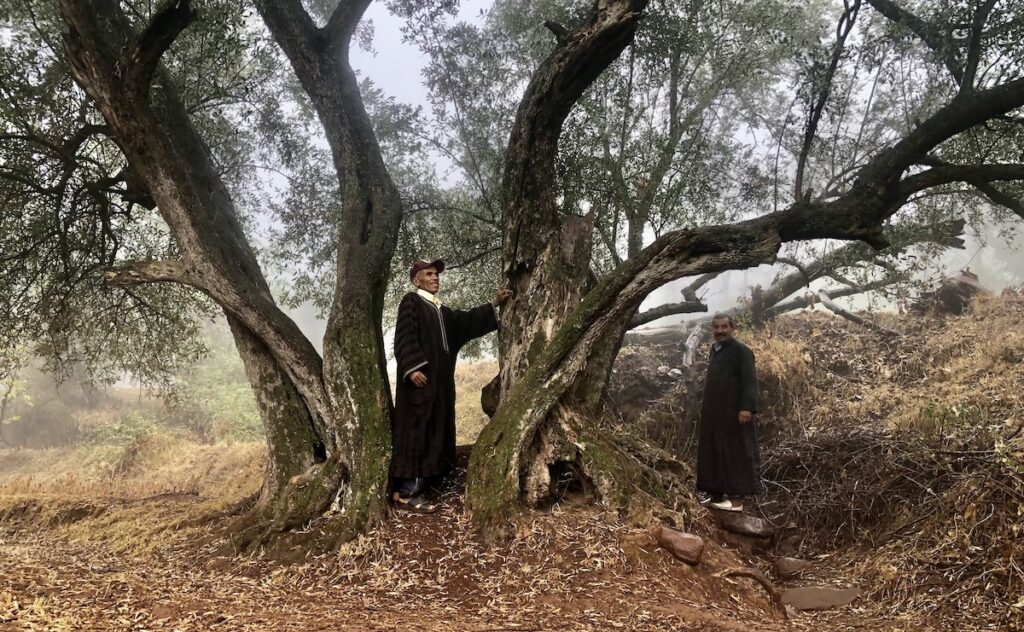
On the trees of the terraces of the wadi Lahjar valley, olive trees several centuries old still live and are still productive.
On the low-altitude terraces, up to 1,000 metres, and on the sunny slopes, the cold-sensitive olive tree dominates and there are still a few abandoned oil mills where olives were crushed before the arrival of the road. Higher up, it is replaced by walnut, carob and even fig trees on the terraces.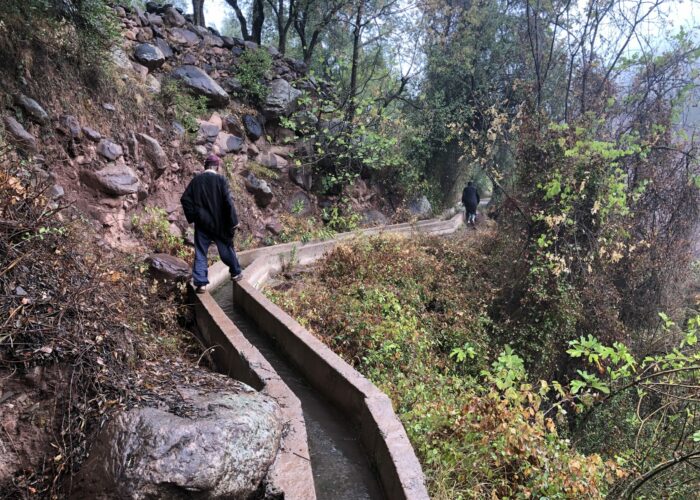
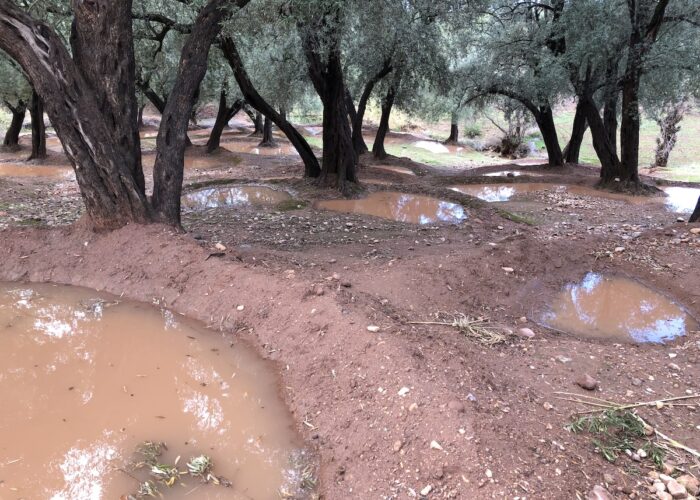
The terraces are irrigated by a now cemented seguia that runs from a water intake on the side of the cliff. But for trees far from the seguia networks, basins collect rainwater.
Two roads lead up to the bottom of this valley, which was once difficult to access. They run on either side of the wadi, overlooking it. The one on the right bank, a wide, recently built track, leads to half a dozen dowwars as far as Tasselt, where it ends. The other, on the left bank, is paved and older, serving the same number of villages before ending at Taïnite, where the first red sandstone cliffs block the way and force travellers to take a track leading into the heart of the mighty Yagour to the south, where numerous springs bubble up, including one in the middle of the cliff with slightly fizzy water. Life in these villages is hard, as is inevitable in Berber country, and many men have left early to seek elsewhere the means to support their families. But their attachment to this life in the open air, free despite the hardships, the bond with their homes built with their own hands, with their plots of land inherited from generation to generation, whose water towers are still distributed with the same ancestral regularity, always brings them back to this nostalgia, to their roots.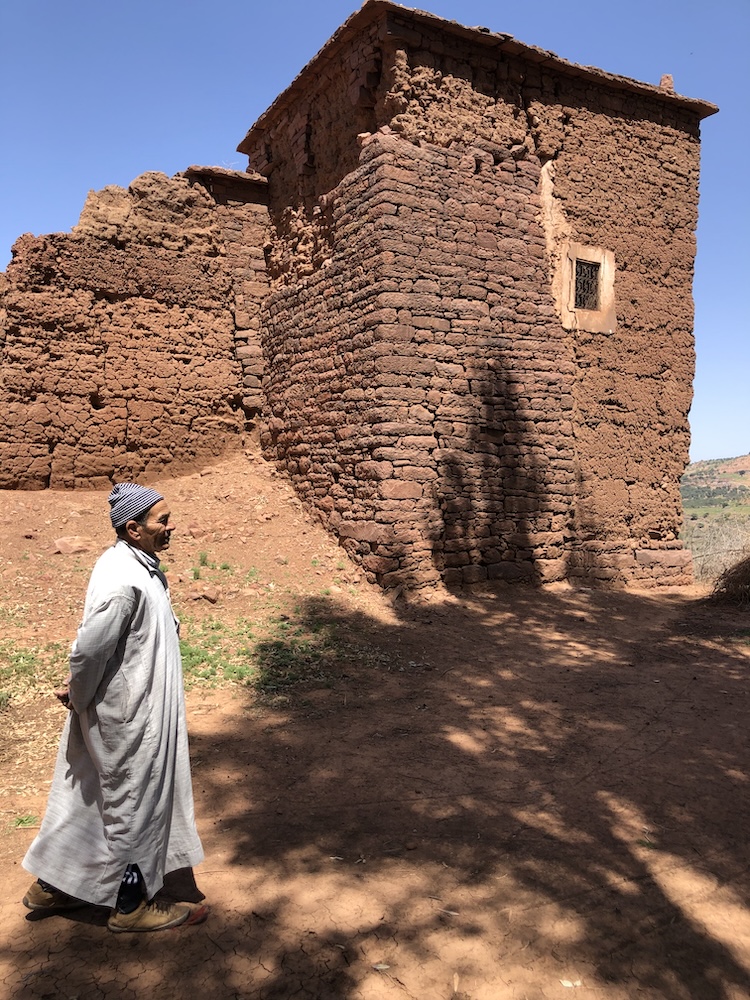
Many stone and earth houses remain, despite the temptation of cement. They are evidence of a skill that has now been almost lost.
A small souk on Saturdays
Sebt Iguerferwane is a recent settlement, built on a plateau in this very rugged region. Since the first administrative buildings were constructed there in the 1980s, a souk has been held on Saturdays. The inhabitants of the foothills come here to stock up for the week, taking advantage of the informal transport that is set up to serve the market. Before this market, the Aït Bou Saïd had to do their shopping much further away, at one of the three markets that have always existed: Tnine Ourika, Jemâa of Aghmat and Tlat of Aït Ourir. For the Aït Bou Saïd, going to the Tuesday market in Aït Ourir meant a three-day journey by mule, with two nights’ stopover in Tihouna, near the Igoudar of the Aït Ghmate, where the Aït Bou Saïd have retained very ancient property rights. The village specialises in doum basketry and woodworking. Hundreds of small rustic stools are made here, with seats made of woven dwarf palm leaf rope (doum). The artisans work primarily with white poplar, which is abundant in the riverbeds, but also with eucalyptus. They also source various citrus species, with their characteristic white wood, which arrive by truck from all over the country to be turned into kitchenware.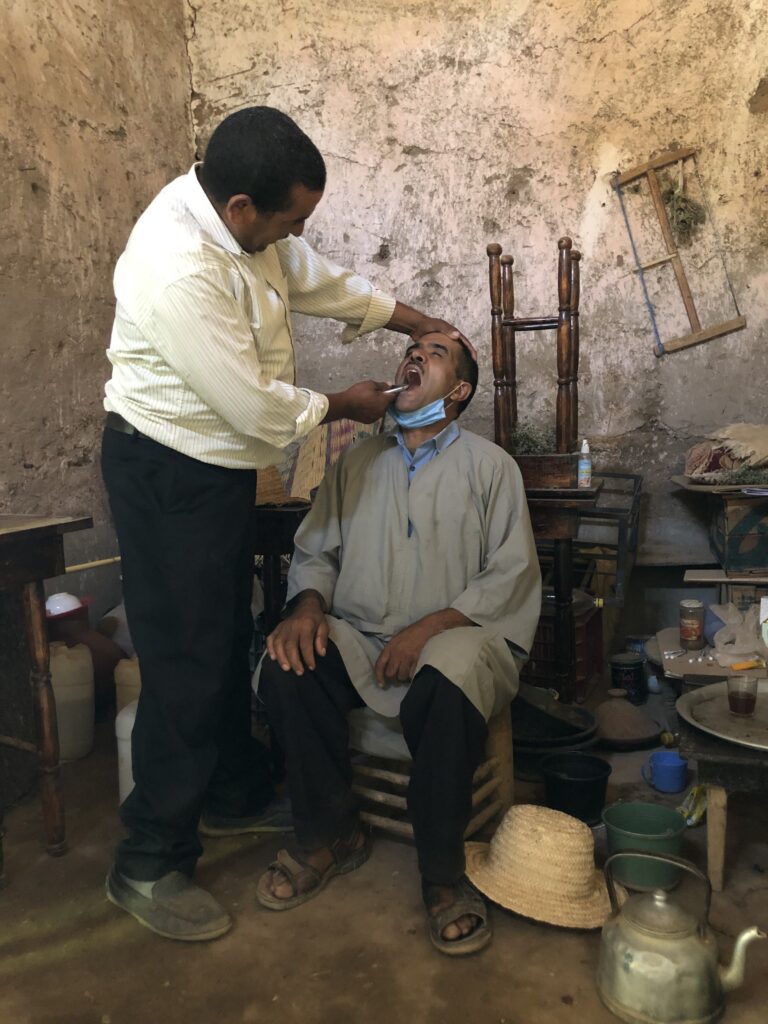
Au souk d’Iguerferouane officie toujours régulièrement un arracheur de dent, à l’ancienne, sans anesthésie. Sa boîte est pleine de dents arrachées au prix d’une forte douleur pour ôter… la douleur.
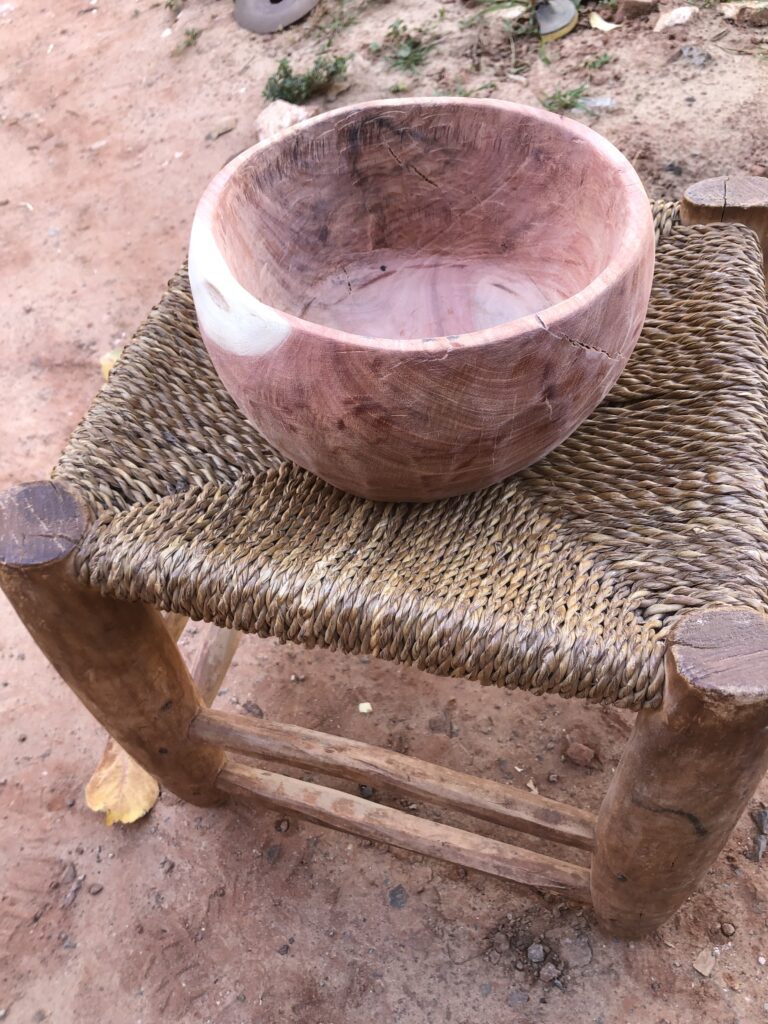
Les habitants d’Iguerferouane se sont spécialisés dans le travail du bois. Ils font ces fameux petits tabourets de peuplier blanc et de corde de doum, et sculptent à la main des objets de cuisine.


