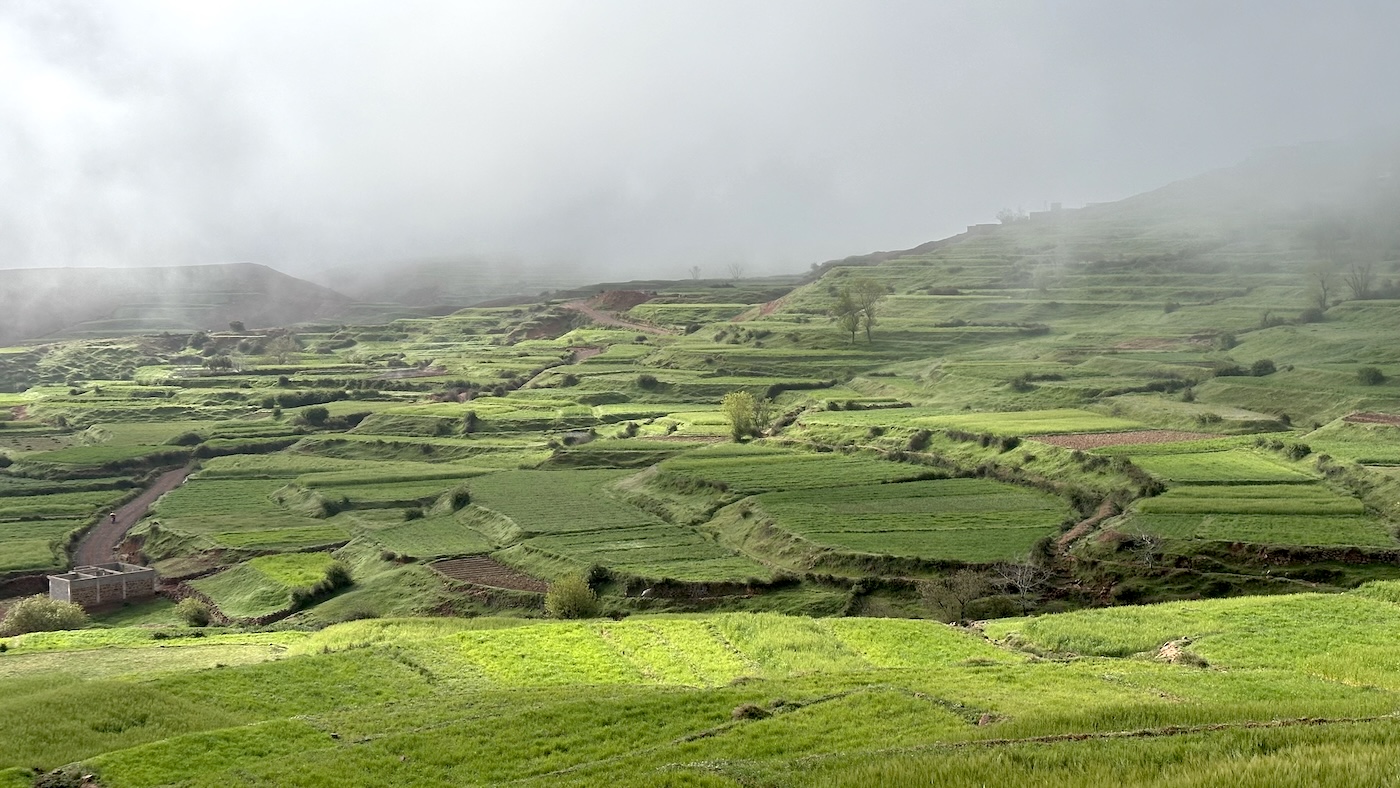
On the eastern side of the Yagour, which descends towards the Zat, a cluster of villages has settled on a large plateau at medium altitude, ideal for farming. These tightly packed villages, where many old stone houses remain, with ash trees cultivated along the banks of the stream and dating back several centuries, bear witness to an ancient tradition that modernity has barely disturbed.
From Taghlayt, a general view of the Aït Inzal plateau in autumn.
When crossing the Wadi Zat from Tighdouine to reach the springs of Sidi El Ouafi, one takes a relatively recent road which, ten kilometres further on, leads to the Aït Inzal plateau. It is a fairly densely populated high plateau, with many villages built to take advantage of the terrain, which is suitable for agriculture, and the abundant water resources at this altitude.
Thanks to the irrigation network they have built over the centuries, the Aït Inzal cultivate cereals and some vegetables for their own consumption. There is little arboriculture and few walnut trees, except for a few recently planted trees. On the other hand, along the streams and canals that descend from the plateau, there is an abundance of trees, mostly narrow-leaved ash trees (Fraxinus angustifolia – Asseln in Berber), a tree that has the advantage of being very resistant to cold and producing both very hard wood for construction and quality fodder for animals in autumn.
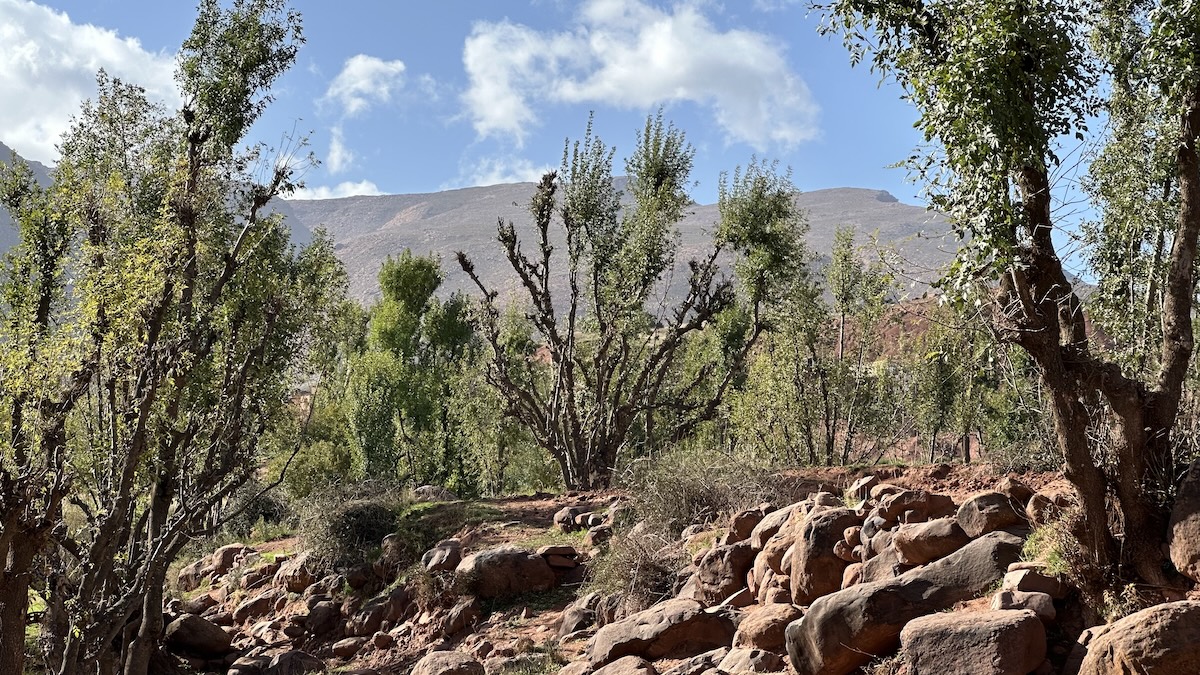
Narrow-leaved ash trees provide high-quality foliage in autumn. Although this pruning disfigures the trees, it does not weaken them. They are exploited in this way throughout the mountains of Morocco, where they are found in abundance along watercourses.
Before the arrival of cement, narrow-leaved ash trees, whose wood is very hard, provided the inhabitants with beams for their roofs.
The old trees found in the stream that flows down from the village of Aït Aacha still bear the scars of large branches and poles that were cut to make ceiling beams. All the ash trees are heavily pruned to feed the animals.
The cutting of large branches has ceased since the arrival of cement, which allows for the construction of long-span beams, something that was not possible with the tree resources they had.
This is a boon for housing, but much less so for the preservation of this remarkable red stone architecture, which the inhabitants no longer want despite its remarkable beauty. Cement has made its way into the villages, gradually eroding traditional housing and causing these villages to irretrievably lose their unique character. But for these inhabitants, nothing is stronger than the ardent desire to embrace the modernity that their isolation had kept at bay.
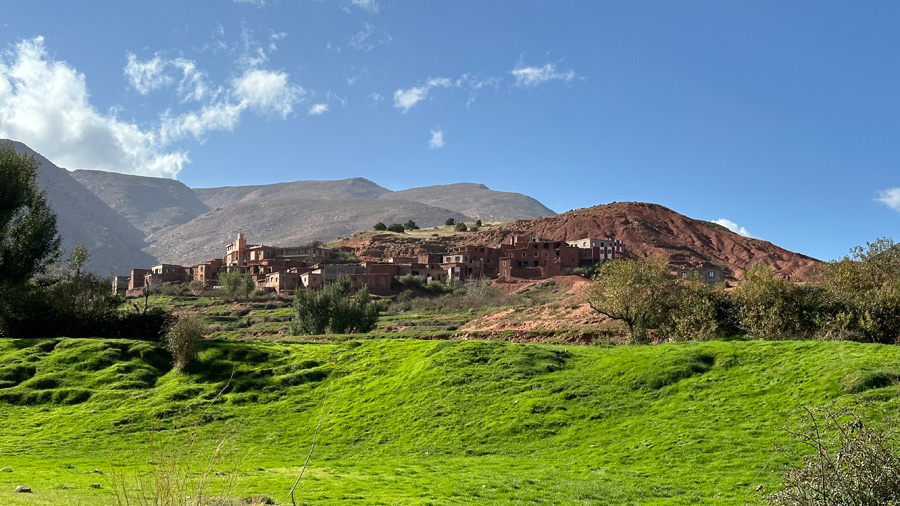
The village of Aït Aacha overlooks fields that are very green in autumn, thanks to irrigation from spring water carried by canals.
The Aït Inzal plateau, once very isolated, is relatively densely populated and comprises a cluster of twelve villages: Aït Warhayn, Igoodmane, Assamran, Ihnash, Aït Aasha, Aït Oottoo, Taghallayt, Matoos, Lahlawt, Aït Wiyrri, Aït Ali and Ihrrâyn. Each of these villages was built on a water catchment area fed by the Yagour. They also have grazing rights on the Yagour plateau and its foothills. Each village has its own Azib. The village of Ihrayn, for example, has the beautiful Zgigi Azib, located on the Meltsen alluvial fan overlooking the Yagour plateau.
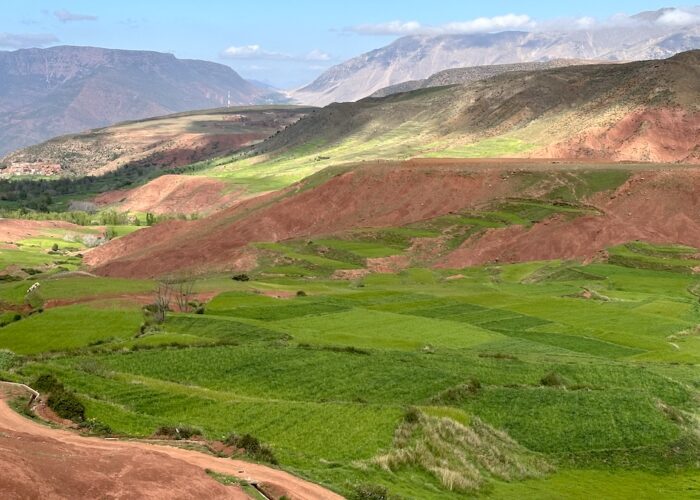
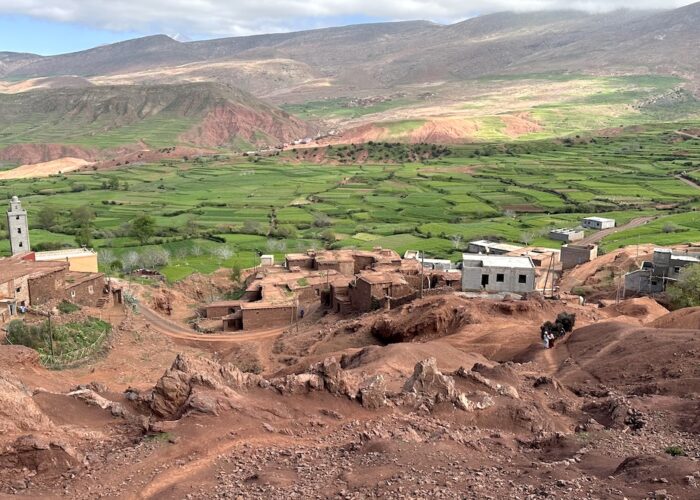
Les douze villages des Ait Inzal sont construit en bordure du plateau de manière à garder les terres pour les cultures. Chaque village dispose de ses parcelles avec une indispensable adduction d’eau.
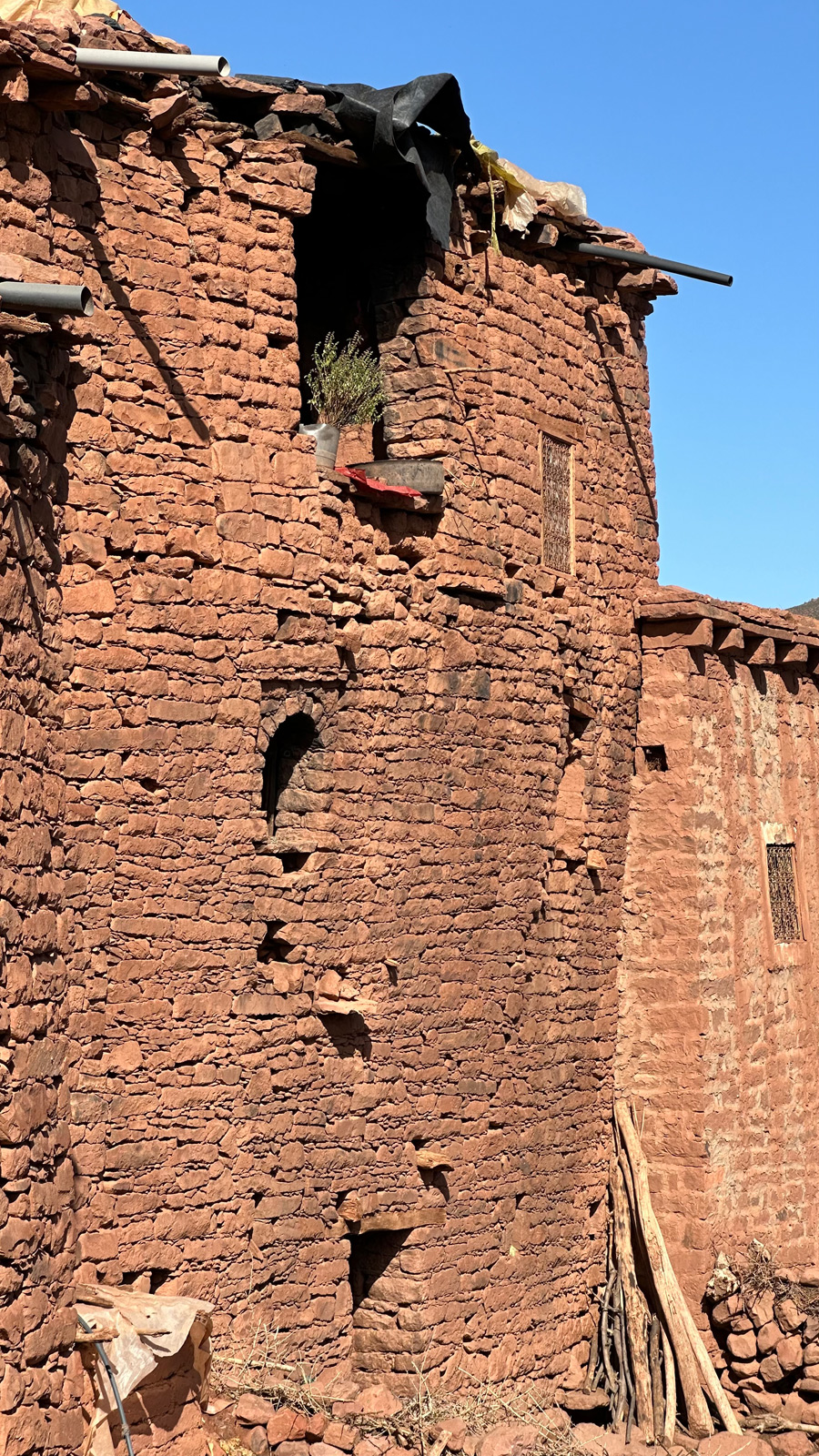
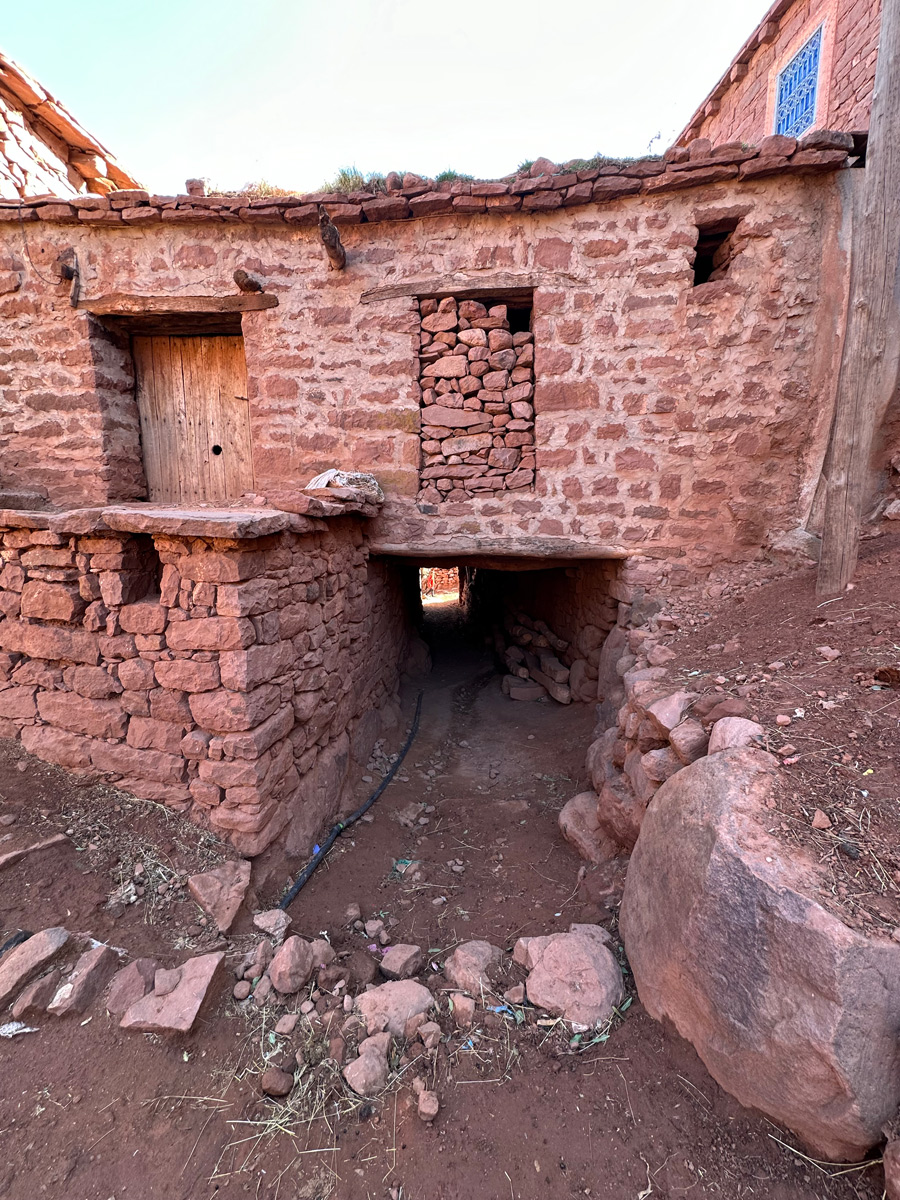
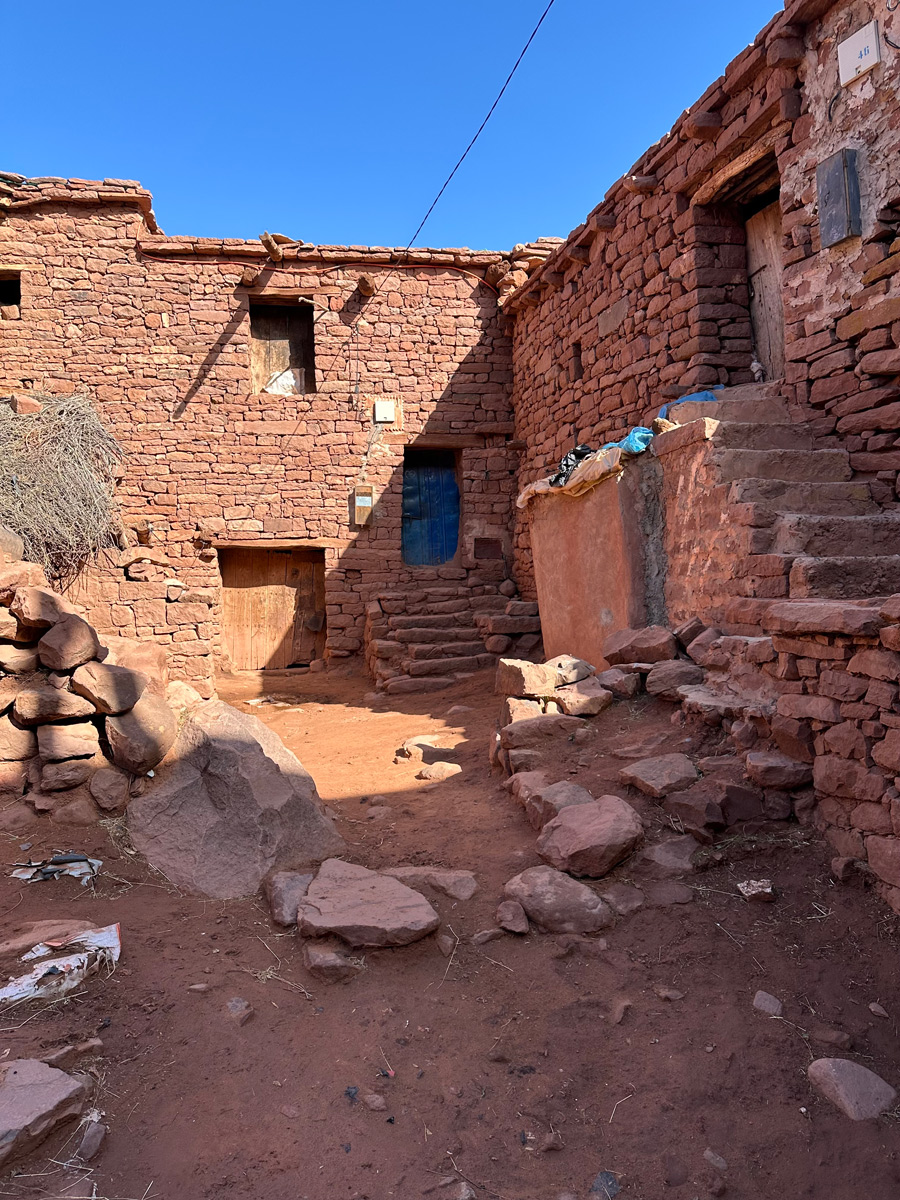
The village of Aït Aasha was built entirely of stone before cement was introduced recently. There are two- and even three-storey buildings, and a magnificent passageway under one house.
Access : take the N9 national road, then the P2016 to Tighdouine, cross the Zat and follow the road to the end. The plateau is located 10 km after the Sidi el Wafi springs. 70 km from Marrakech, 1.5 hours by car.


