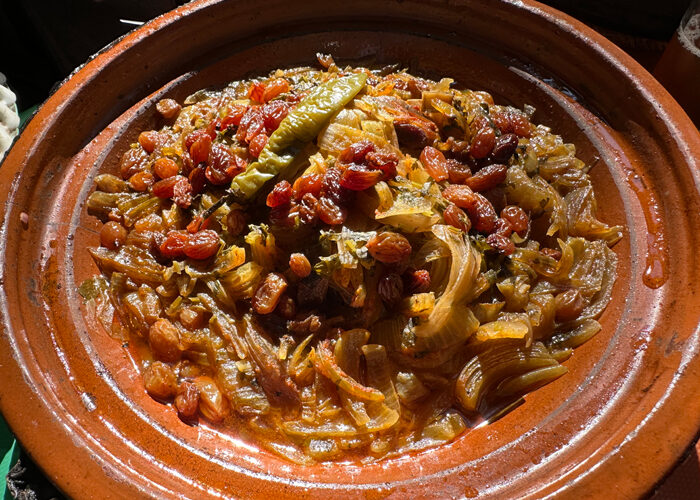
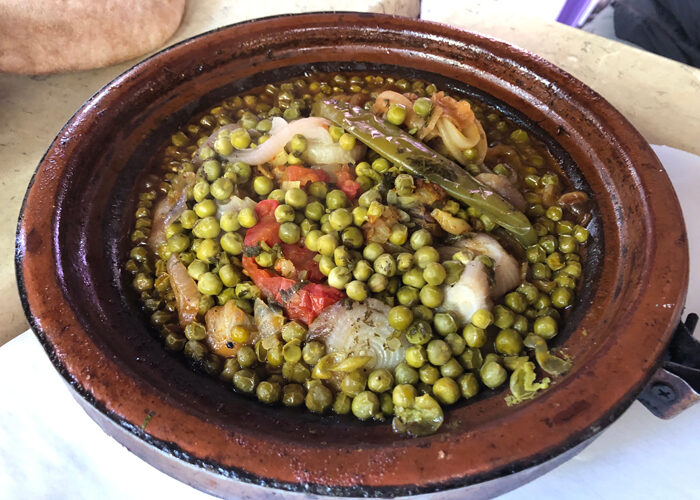
À une heure trente de Marrakech, l’Arbaa de Tighdouine, un souk rural qui se tient le mercredi, est une immersion directe dans le monde des montagnes du Zat. Juste en face, les sources de Sidi El Ouafi valent le détour pour boire son eau légèrement gazeuse. Ses vertus digestives sont toutes indiquées après un tajine authentique que vous ne manquerez pas de déguster dans un des nombreux petits restaurants du coin.
The Wednesday souk in Tighdouine
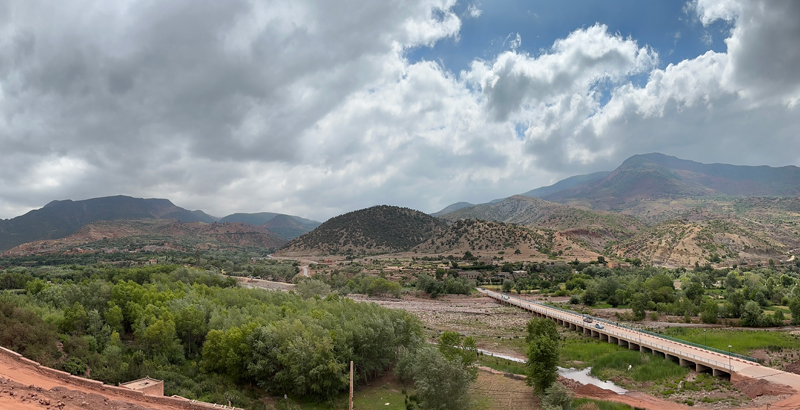
Le pont sur l’Oued Zat, vu de Tighdouine, avec en arrière-plan à gauche, l’important village de Talatast, connu pour ses poteries.
The Zat region around Tighdouine lives off agriculture, with a few specialities such as garlic and verbena. Just opposite Tighdouine, on the other side of the wadi, stands the village of Talatast, known for its pottery. This large village has been perched on its cliff for centuries, but Tighdouine, once a small hamlet, has overtaken it thanks to the road built on its banks. Things to see :A magnificent road through the valley. A traditional and authentic souk. Access: Tighdouine is located 47 km from Dar Rana, 60 km from Marrakech and 26 km from Aït Ourir. The junction from the RN9 road leading up to Ouarzazate is clearly signposted. Then simply follow the P2016 road.The Sidi El Ouafi spring
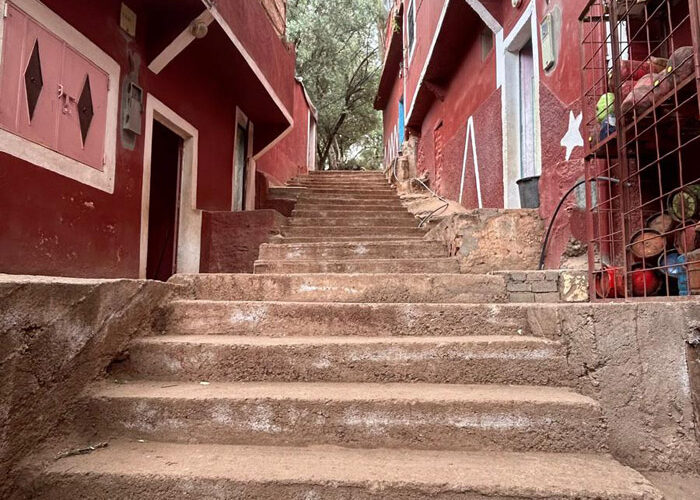
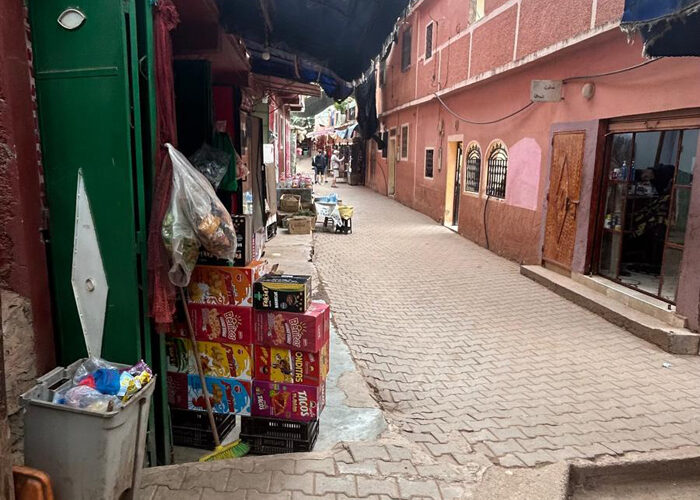
Autour des sources se sont greffés de façon informelle et anarchique des petits commerces et des gargotes.
It has obviously been flowing since geological times, and the Berbers have always frequented it, but the official chronology says that it was discovered in the 1990s. Perhaps this means that its waters were analysed at that time and its virtues discovered, or rather scientifically explained. The Berbers of Zat are well aware of the digestive properties of this very slightly sparkling water. ‘If you drink water from the spring during your meal, you will quickly feel hungry,’ they like to say. This is also the case with another spring on the other side of the Yagour massif, which is also slightly sparkling. The spring water of Sidi El Ouafi is typical of limestone regions, such as the High Atlas at this location, at the foot of the Yagour. It is calcium bicarbonate water, moderately mineralised, slightly fizzy and compliant with drinking water standards. It is particularly good for digestion and healthy muscle and bone function thanks to its high calcium and magnesium content.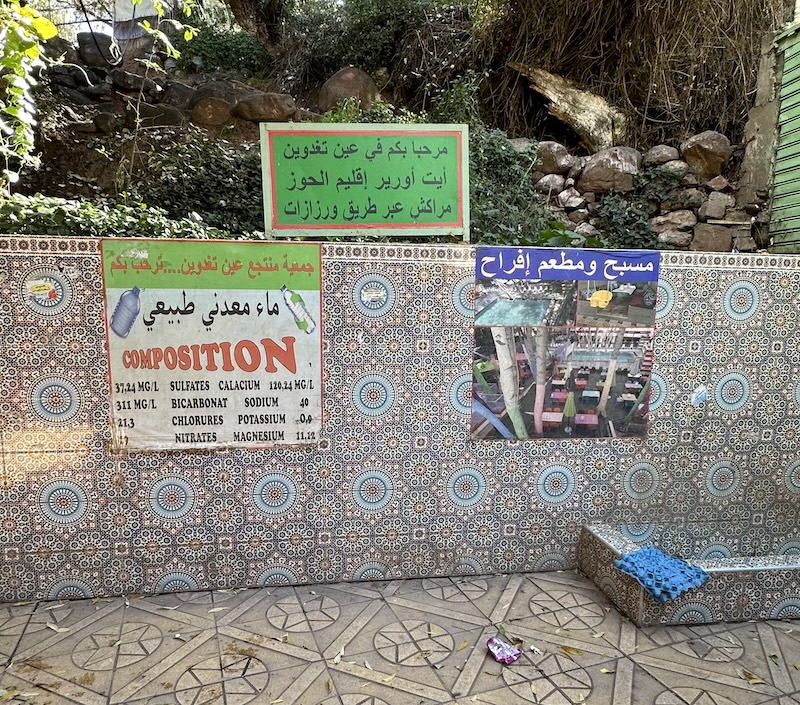
L’eau de la source réputée digestive a fixé toute une activité autour d’elle.
People come here to drink and fill their plastic bottles and containers for free in a specially designated area. It seems to be located in this small built-up corner, covered with coloured ceramics, which has a tap from which the spring water flows continuously, with its official mineral composition to its right. But the site is riddled with springs and at multiple points nearby, barely a few metres away, the same water gushes generously. Local lore has it that there are seven springs, which are difficult to locate today. The site is now known to the people of Marrakesh, who, in the summer, flock here on Sundays or during school holidays to eat a tagine, usually made with goat, or grilled meats in one of the many simple restaurants that have sprung up spontaneously. These busy days, when the only main road is very crowded and the site is full of the cries of children, alternate with others, especially during the week, when only a few restaurants are open for customers who come here contrary to custom.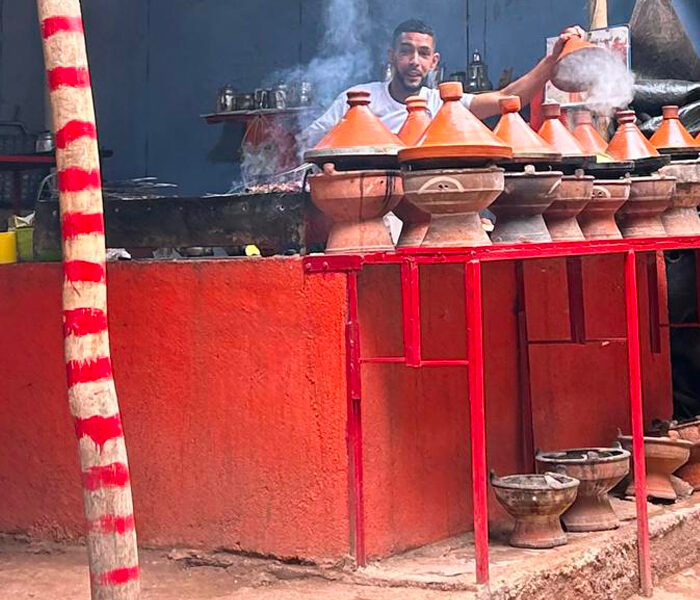
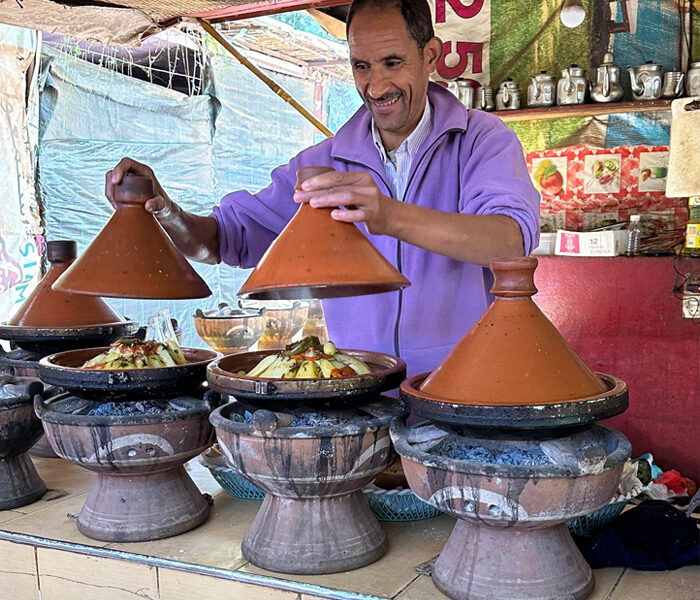
Les Marrakchis viennent en famille y manger des tajines ou des grillades à la belle saison, pendant que les enfants jouent ou se baignent dans quelques piscines sommaires qui se remplissent avec l’eau des sources.
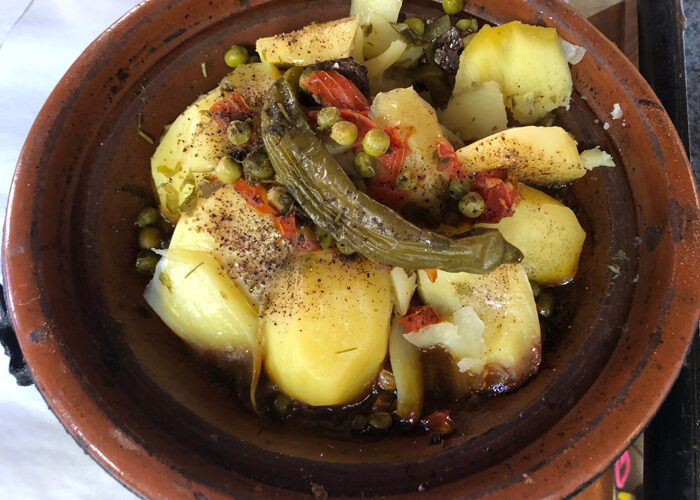 Le très classique tajine aux pommes de terre.