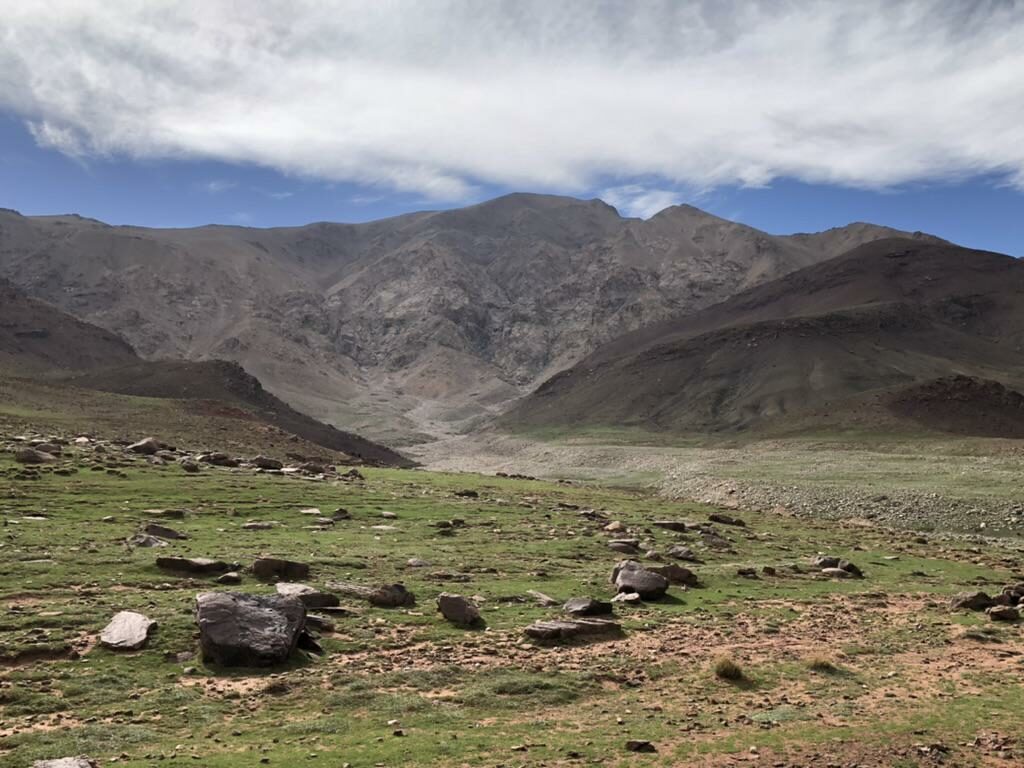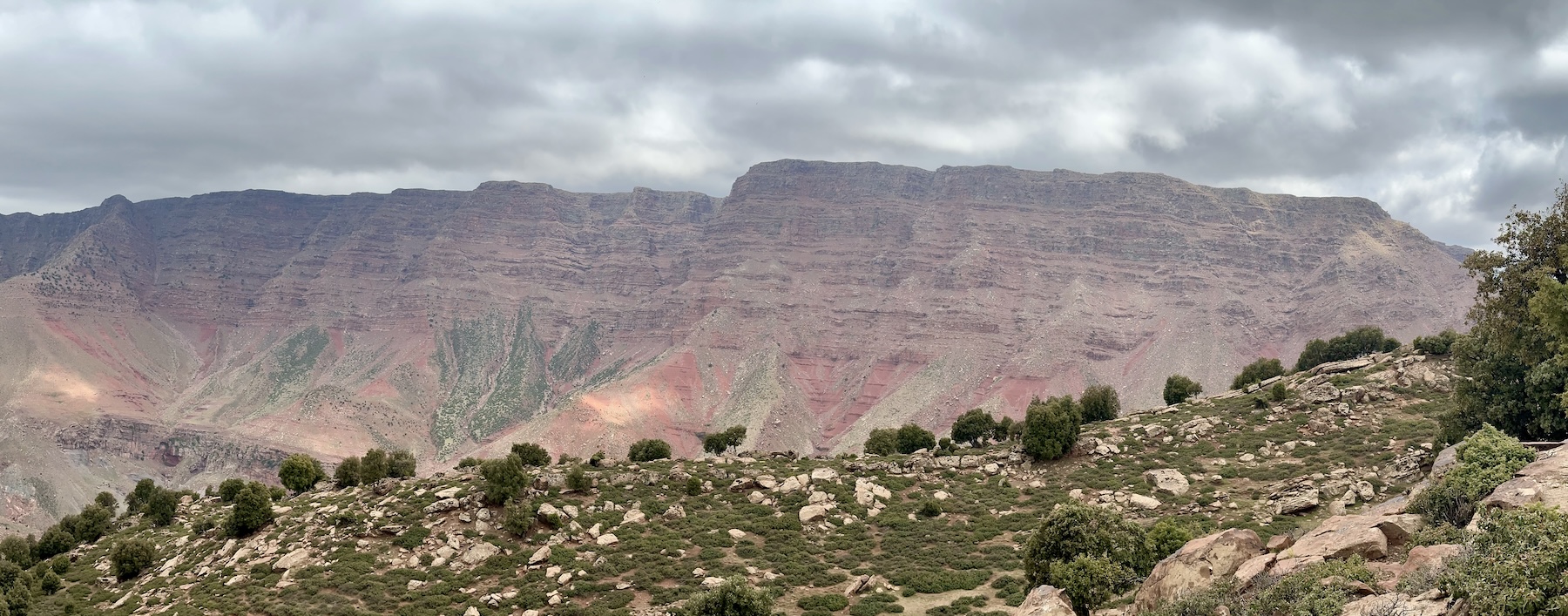
In the western High Atlas Mountains, which stretch across the entire southern horizon of Marrakech and are pierced by steep-sided valleys, plateaus are very rare. The Adrar Yagour is one of these precious exceptions. It lies hidden behind a high ridge of red sandstone that rises to 2,728 metres at Adrar Yagour, overlooking Marrakech and the Haouz plain. Behind this dark barrier, the plateau stretches over twenty kilometres from Oued Zat in the east to Oued Ourika in the west, and is four to five kilometres wide.
Access from the north in the middle of the cliff is rewarding but demanding. It is reserved for those who are sure-footed and accompanied by a local shepherd who will find the path that only goats know. Halfway along the plateau trail, there is a slightly fizzy calcium bicarbonate spring, which is said to whet the appetite, and above which a small waterfall pours down like a shower from the cliff.
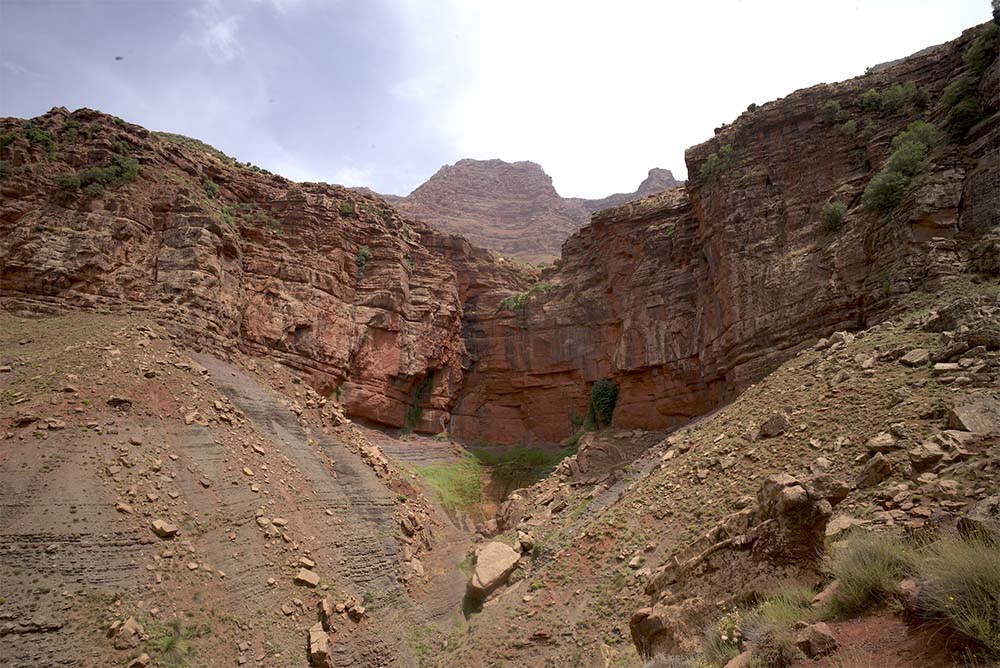
Nestled in the Yagour cliff face, a small waterfall cascades down, and just below it a gently sparkling spring slowly emerges.
The sides of the plateau offer many easier access points that have been used by humans since ancient times. The Yagour plateau is renowned for its wealth of rock carvings made by shepherds from the late Neolithic period to the horsemen who were contemporaries of the Roman conquest. It has around twenty sites, eight of which are considered important, notably that of Talaat n'Iisk, to the east.
It is on its eastern side that the Yagour is most accessible, although it is never without effort. It takes three hours to walk from Azgour, on the Oued Zat, through the cork oak forest or along a recently marked trail. It is also accessible from the many douars scattered beneath the Yagour ridge, in the land of the Aït Bou Saïd, or even more easily from the Aït Inzal plateau, which can be reached via the Arbaa de Tighdouine.
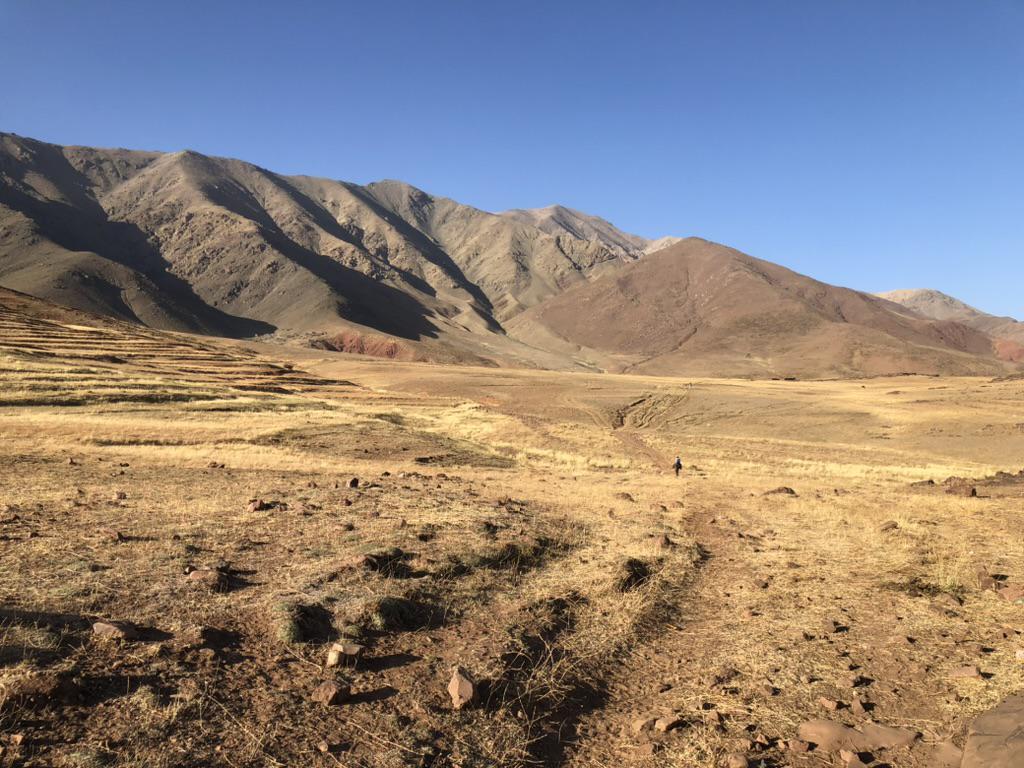
Although dry in summer, the plateau is frequented by shepherds driving their flocks.
Each of these douars, which cultivate their terraces at medium altitude, has, within walking distance, grazing land where their shepherds graze their sheep and goats as long as the harsh winter and snow do not prevent them from doing so.
The azib (sheepfolds), roughly built of stone, provide shelter for the shepherds and their flocks for the night. The shepherds take turns watching over the animals for a period of time proportional to the number of head of livestock each one has.
Only the shepherds from the douar of Ouarzazt, where the track that climbs from Zat just before Azgour ends, have the privilege of being able to return home in the evening if they wish, from their azib to their houses, a good hour’s walk below.
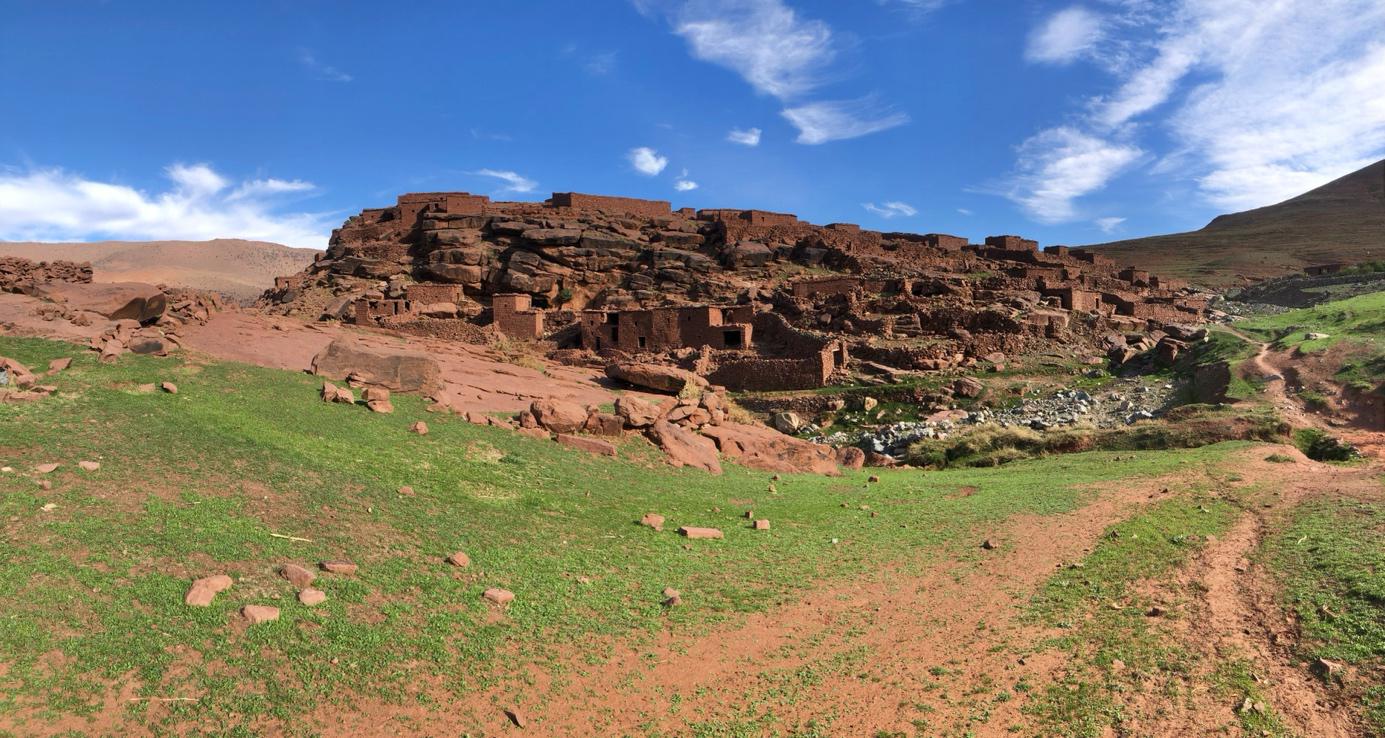
Azib Belqos is the largest of them. It resembles a village but is only inhabited during the grazing season.
On the Ourika Valley side, access is longer, although more popular with hikers, mainly because of its proximity to Marrakech. You climb towards Yagour via several douars, Tizi n'Oucheg, Aguerd, or Ouigrane. The plateau on its western flank reaches its highest point, making it seem more distant, and the ascent is advantageously broken up by a night in a lodge just below the plateau.
Whether you approach it from the east or the west, crossing the Yagour inevitably brings you face to face with its master, the Meltsen (or Maldsane), whose imposing white granite pyramid dominates the entire plateau and beyond from its height of 3,595 metres. The Adrar Meltsen is believed to be sacred. The number of engraving sites at its foot and the etymology of its name suggest this. Yagour comes from agourram, which means saint in Berber, and could mean sacred place.
The Meltsen cirque drains its waters into the assif melloul (white river in Berber), in a wadi as white as the granite torn from its flanks. It passes in front of Azib Zguigui, whose shepherds come from the douar Ighraï.
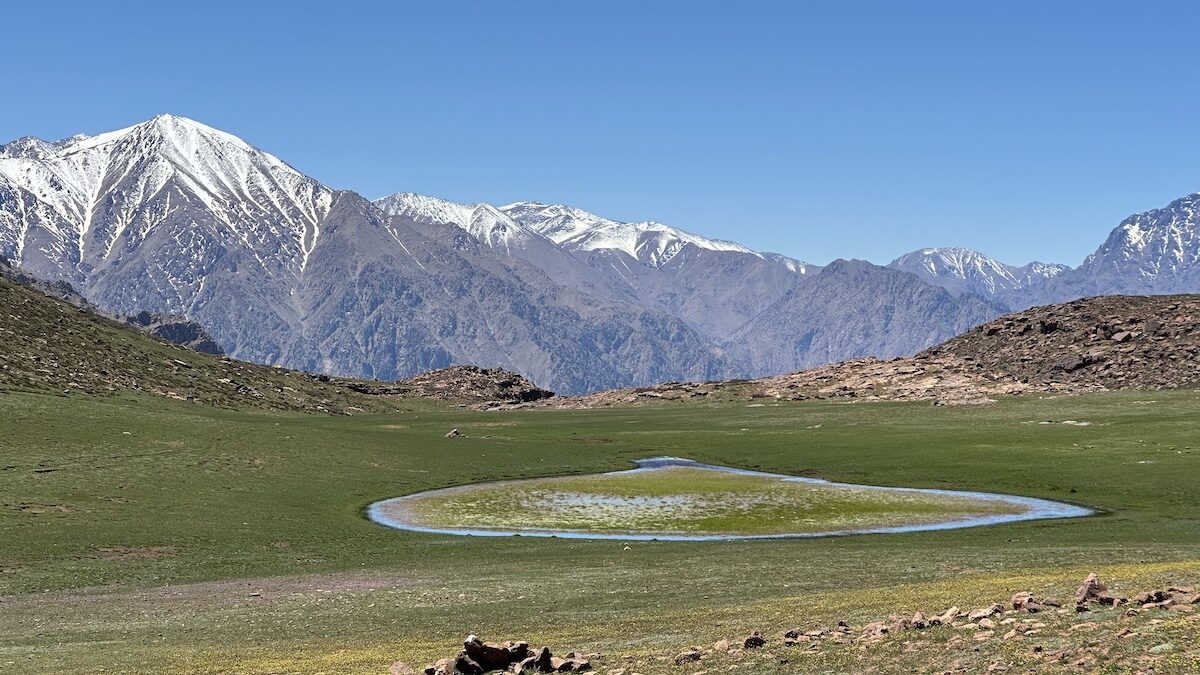
The plateau is commonly crossed in two days of walking, sometimes three when taking one's time, especially to discover the temporary lake Iferd Yagour, which is too often dry.
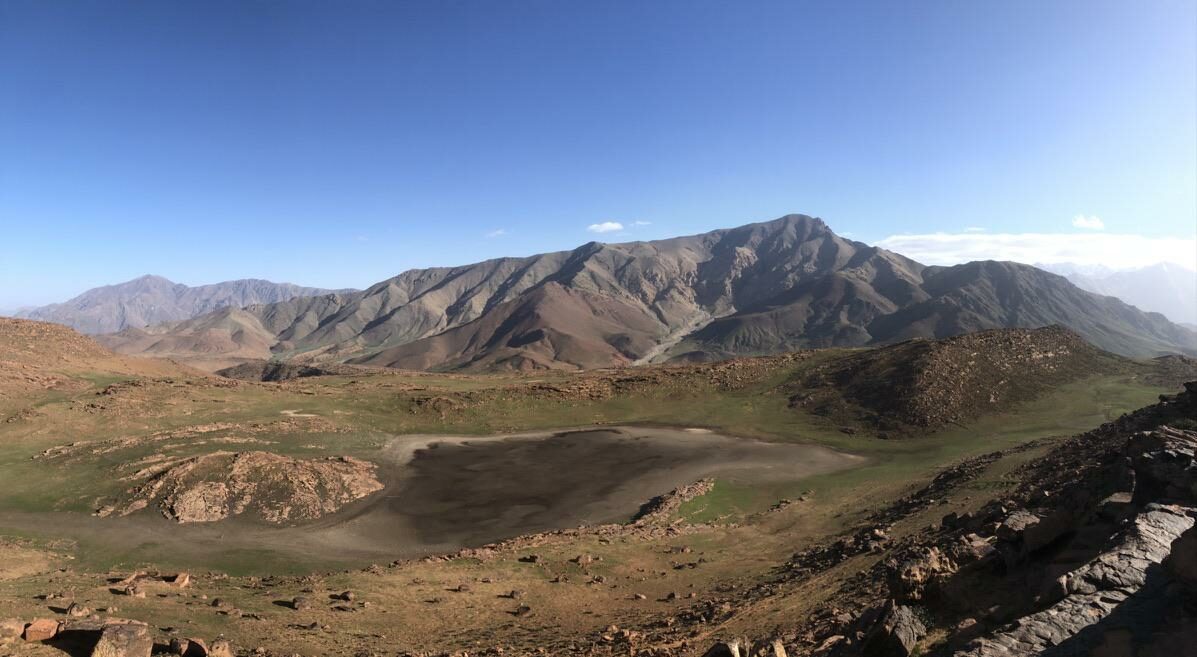 Le lac temporaire (Iferd Yagour), victime de la sécheresse, n'a plus été rempli depuis de longues années.